Lessons can be read in English and Japanese. Read whichever you prefer!
レッスンは英語と日本語で読めます。お好きな方をお読みください!
English Lesson
Hello, everyone!
In the last lesson we studied question sentences. Now you can all introduce yourselves and ask simple questions!
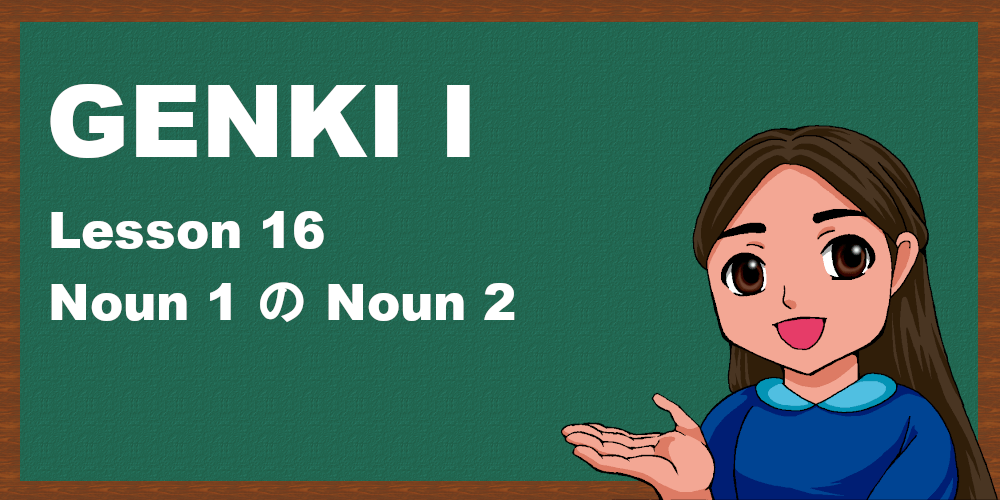
In this lesson, we will study how to modify nouns with nouns. We have only a few more grammar lessons left in the lesson 1 of the textbook. Keep up the good work!
First, before starting the lesson, I will present the answers to the homework assignment from the previous lesson.
I’ve made a Word document and a PDF file, so you can download them if you want to see the answers!
Answers to lesson 15 homework
The answers to the previous quiz are explained below. If you do not need to see the answers to the quiz, skip ahead.
The previous quiz consisted of questions and answers.
If you can ask questions, you will enjoy talking more. Lots of practice, lots of talking!
Quiz 1: Look at the table below and answer the questions.
| Name | サラ | ジョージ | ユナ | よしこ |
| Nationality | Australian | American | Korean | Japanese |
| Occupation | graduate student | college student | (senior) high school student | teacher |
| Year | 1 | 3 | 2 | N/A |
| Major | business | politics | English | Japanese |
| Age | 24 | 21 | 17 | 35 |
- サラさん は アメリカじん ですか。 いいえ、オーストラリアじん です。
- ジョージさん は なんねんせい ですか。 さんねんせい です。
- ユナさん は なんさい ですか。 じゅうななさい です。
- よしこさん は がくせい ですか。 いいえ、せんせい です。
- サラさん は だいがくいんせい ですか。 はい、そうです。
- ユナさん は ちゅうごくじん ですか。 いいえ、かんこくじん です。
- よしこさん は さんじゅっさい ですか。 いいえ、さんじゅうごさい です。
- (ユナさん)せんこう は なん ですか。 えいご です。
- (よしこさん)せんこう は なん ですか。 にほんご です。
- ユナさん は こうこうせい ですか。 はい、そうです。
The answer to the question ~ですか is either はい、そうです or いいえ、~です.
Answers to questions using なん do not use はい/いいえ. The answer is either a noun or a number.
Quiz 2: Look at the table above and write your answer in brackets.
| サラ | ジョージさん は アメリカじん ですか。 |
| ジョージ | (はい、そうです)。 |
| サラさん は イギリスじん ですか。 | |
| サラ | (いいえ、オーストラリアじん です)。 |
| ジョージさん は (なんねんせい ですか)。 | |
| ジョージ | さんねんせい です。 |
| サラ | (せんこう は なん ですか)。 |
| ジョージ | せいじ です。 |
| サラさん は なんねんせい ですか。 | |
| サラ | (いちねんせい です)。 |
| ジョージ | せんこう は なん ですか。 |
| サラ | (ビジネス です)。 |
なん ですか is equivalent to ‘What is…? in English. Therefore, you can ask a variety of questions using the sentence pattern X は なん ですか.
| 日本語(にほんご) | 英語(えいご) |
| おなまえ は なん ですか。 | What is your name? |
| こたえ は なん ですか。 | What is the answer? |
| しつもん は なん ですか。 | What is the question? |
This sentence pattern can be used in questions where the noun is the answer. But しゅっしん uses a different interrogative because the place is the answer. So you cannot say しゅっしん は なに ですか.
Questions using question words other than なん will be studied later. So for now, learn the questions with なん that you studied in the lesson so that you can use them correctly!
Let’s start this lesson!
First, let’s check out the illustration of what we’ll be studying in this lesson!
Contents of this lesson

This time we will use the particle の. We will study how to combine two nouns using の.
The sentence type is ‘Noun 1 の Noun 2‘. The の is shown in blue.
The first noun describes the attributes of the second noun.
It is a very simple sentence pattern, but some people get the order of Noun 1 and Noun 2 wrong.
I’ll explain it below as clearly as I can, so you remember correctly not to confuse the order of the nouns!
Sentence pattern: Noun 1 の Noun 2
The ‘Noun 1 の Noun 2’ sentence pattern usually uses two nouns. Structurally, many nouns can be linked together, as in ‘Noun 1 の Noun 2 の Noun 3 の……’, but if they are too long they are difficult to understand.
の works similarly to the English ‘of’, but they are not the same. Remembering that ‘の = of’ can be a source of error. See the example below for an explanation of why this is the case.
| 日本語(にほんご) | 英語(えいご) |
| にほんじん の せんせい | a Japanese teacher |
| とうきょう の だいがく | a university in Tokyo |
| エマさん の ともだち | a friend of Emma’s |
The example sentences above are the ones presented in the illustration and their English translations.
As can be seen, in Japanese they all use the same particle の, but in English the words corresponding to の are all different.
So, if you remember ‘の = of’, it is possible that you may not be sure how to translate ‘a Japanese teacher’ or ‘a university in Tokyo’ into Japanese.
The Japanese ‘Noun 1 の Noun 2’ is ‘Noun 2 of Noun 1’ in English, so the order of the nouns is reversed. You can remember that the order is reversed from English, but you don’t always need to remember Japanese grammar in comparison to English.
Now I’ll give you some tips on how to remember ‘Noun 1 の Noun 2’.
The key is ‘Noun 2’.
This is because ‘Noun 1’ is additional information to explain the attributes of ‘Noun 2’ and ‘Noun 2’ is the main noun, such as topic or subject.
The にほんじん in にほんじん の せんせい is a noun to describe what kind of teacher せんせい is.
The とうきょう in とうきょう の だいがく is a noun used to describe where the だいがく is located.
エマさん in エマさん の ともだち is the name given to explain whose friend the ともだち is.
Now let’s try combining the words がくせい and なまえ. Which of the following is correct?
- がくせい の なまえ
- なまえ の がくせい
You understand, right?
The answer is 1. がくせい の なまえ. In this case がくせい acts as a noun to explain whose name it is. So it is not なまえ の がくせい.
If you have a textbook, you can find an explanation on the following pages.
| Second edition | Pages 44 and 45: 3 noun1 の noun2 |
| Third edition | Page 43: 3 noun1 の noun2 |
Now let’s have a bit of practice!
Before practising, you should first learn the following words.
vocabulary
| 日本語(にほんご) | 英語(えいご) |
| 高校(こうこう) | high school |
| 大学(だいがく) | college/university |
| 電話(でんわ) | telephone |
| 友達(ともだち) | friend |
| 番号(ばんごう) | number/series of digits |
Do you know how to say ‘telephone number’ in Japanese?
Using the sentence pattern ‘Noun 1 の Noun 2’, we get でんわ の ばんごう. But Japanese people say でんわばんごう. The の is not necessary.
When two nouns are combined into one proper noun, there is usually no の.
Please see below for two examples that don’t need の.
Examples of ‘Noun 1 + Noun 2’
1.Often in words written only in Kanji.
Example:電話番号(でんわばんごう)
※ It is sometimes difficult to understand the criteria for omitting の, e.g. 日本語教師(にほんごきょうし) but not 日本語先生(にほんごせんせい). If you are unsure, it is okay to use の. 日本語(にほんご)の教師(きょうし) is not a mistake either.
2.Name of school or institution
Example:東京大学(とうきょうだいがく)
※ 東京大学(とうきょうだいがく) = The University of Tokyo. But 東京(とうきょう)の大学(だいがく) is ‘a university in Tokyo’. Be careful, because the meaning is completely different when there is a の.
Practice
Translate the English below into Japanese.
- a university in Japan
- a high school teacher
- name of the friend
- Emma’s major
- my work
- John’s telephone number
- University of Oxford
- Emma’s mother
- John’s father
- an American student
Check out the PDF below for the answers!
If you have a textbook, try practising the exercises on the pages below!
| Second edition | Page 51: IV にほんごの がくせい |
| Third edition | Page 50: III A |
Noun 1 の Noun 2 + X は Y です
Next, let’s make a sentence using the sentence patterns ‘Noun 1 の Noun 2’ and ‘X は Y です’!
| 日本語(にほんご) | 英語(えいご) |
| エマさん の せんこう は れきし です。 | Emma’s major is history. |
| ジョンさん の おとうさん は こうこう の せんせい です。 | John’s father is a high school teacher. |
| サラさん は エマさん の ともだち です。 | Sarah is a friend of Emma’s. |
If you put two sentence patterns together, you can make a lot of sentences!
You can also make up sentences for questions.
| 質問(しつもん) | 答(こた)え |
| エマさん の せんこう は なん ですか。 | れきし です。 |
| ジョンさん の おとうさん は せんせい ですか。 | はい、そうです。 |
Practice
1.Translate the English below into Japanese.
- Emma is an American student.
- John’s mother is British.
- Sarah’s major is business.
- My teacher is Japanese.
- Emma is a friend of John’s.
2.Look at the table below and answer the questions.
| Name | エマ | ジョージ | トム | よしこ |
| School | Liberty Univ. | Univ. of America | ABC Univ. | Nihon Univ. |
| Major | history | politics | computer | (Japanese teacher) |
- エマさん は リバティーだいがく の がくせい ですか。
- ジョージさん の せんこう は なん ですか。
- トムさん の せんこう は ビジネス ですか。
- よしこさん は にほんだいがく の がくせい ですか。
- エマさん の せんこう は えいご ですか。
- トムさん は にほんだいがく の がくせい ですか。
- ジョージさん は リバティーだいがく の がくせい ですか。
Check out the PDF below for the answers!
If you have a textbook, practise on the pages below!
| Second edition | Pages 51 to 53: V メアリーさんは アメリカじんです AとB |
| Third edition | Page 50: B Page 51: C |
For practice in the third edition, look at the table on page 50.
Summary quiz
Now here is a quiz to summarise the lesson.
This time we have a quiz on sentences and questions using ‘Noun 1 の Noun 2’. Let’s review some of the questions we have studied so far!
Quiz 1: Translate the English below into Japanese.
- Student of Nihon University
- University telephone number
- Teacher of the Japanese language
- American friend
- University in Australia
Quiz 2: Look at the table below and answer the questions.
| Name | サラ | ジョージ | ユナ | よしこ |
| Nationality | Australian | American | Korean | Japanese |
| Occupation | graduate student | college student | (senior) high school student | teacher |
| School | Univ. of Australia | Univ. of America | Seoul high school | Nihon Univ. |
| Year | 1 | 3 | 2 | N/A |
| Major | business | politics | English | Japanese |
| Age | 24 | 21 | 17 | 35 |
- サラさん は アメリカだいがく の がくせい ですか。
- ジョージさん は なんねんせい ですか。
- ユナさん の せんこう は なん ですか。
- よしこさん の せんこう は えいご ですか。
- サラさん の せんこう は ビジネス ですか。
- ユナさん は ソウルだいがく の がくせい ですか。
- よしこさん は なんさい ですか。
- ジョージさん は アメリカだいがく の せんせい ですか。
- ユナさん は なんねんせい ですか。
- サラさん は なんさい ですか。
That’s it for the quiz! It’s a bit difficult, isn’t it? If you found this quiz easy, you’re amazing!
Thank you to everyone who took the quiz! Answers will be announced in the next lesson.
If you have any questions, please leave a message using the contact form!
Homework
The workbook homework is on the following pages.
| Second edition | Page 15: I / II 6. Page 16: II 1. |
| Third edition | Page 18 |
If you don’t have a workbook, do the homework below.
Download the Word or PDF version whichever you prefer!
Check the answers in the workbook by looking at the answer book.
Answers to original homework assignments will be presented in the next lesson.
If you have any thoughts about the lessons or homework, please tell me!
In the next lesson, we will finish Lesson 1 of the textbook!
When we have finished Lesson 1, we are going to have a summary lesson for Lesson 1. Make sure you have mastered all the sentence patterns you have studied so far before moving on to Lesson 2!
Thank you for reading!
See you in the next lesson!
For more lessons from Lesson 1, click here!

Click here to go to the Hiragana and Katakana practice page!


日本語(にほんご)のレッスン
みなさん、こんにちは!
前回(ぜんかい)は質問(しつもん)の文(ぶん)と答(こた)え方(かた)を勉強(べんきょう)しました。これで、みなさんは自己紹介(じこしょうかい)と簡単(かんたん)な質問(しつもん)ができるようになりました!
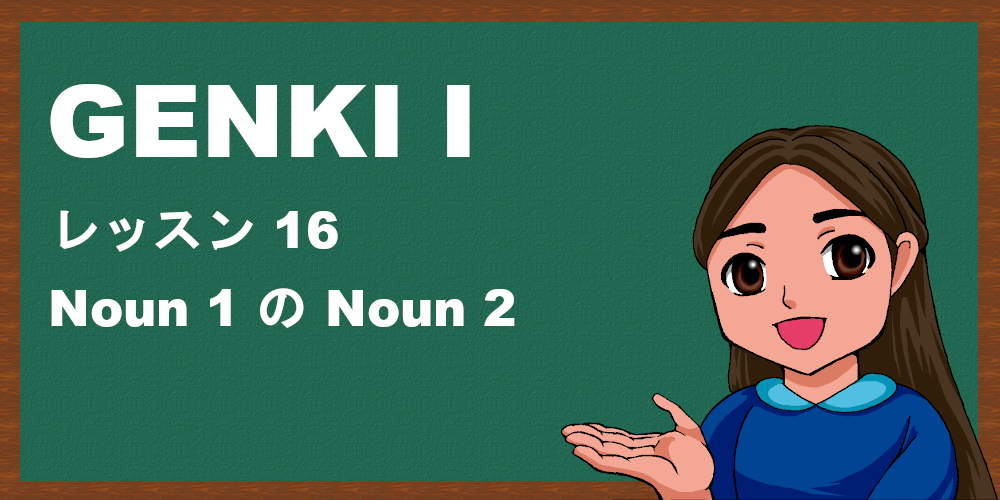
今回(こんかい)は、名詞(めいし)をもっと詳(くわ)しく説明(せつめい)する方法(ほうほう)を勉強(べんきょう)します。教科書(きょうかしょ)の第一課(だいいっか)の文法(ぶんぽう)は、あと少(すこ)しだけです。がんばりましょう!
今回(こんかい)も、レッスンを始(はじ)める前(まえ)に、宿題(しゅくだい)の答(こた)えを発表(はっぴょう)します。
WordとPDFを作(つく)ったので、答(こた)えを見(み)たい人(ひと)はダウンロードしてください!
レッスン15の宿題(しゅくだい)の答(こた)え
前回(ぜんかい)のクイズの答(こた)えは、下(した)で説明(せつめい)します。クイズの答(こた)えを見(み)なくてもいい人(ひと)は、スキップしてください。
前回(ぜんかい)のクイズは、質問(しつもん)と答(こた)えの文(ぶん)でした。
質問(しつもん)できると、話(はな)すのがもっと楽(たの)しくなりますね。たくさん練習(れんしゅう)して、たくさん話(はな)しましょう!
クイズ1:下(した)の表(ひょう)を見(み)て、質問(しつもん)に答(こた)えてください。
| Name | サラ | ジョージ | ユナ | よしこ |
| Nationality | Australian | American | Korean | Japanese |
| Occupation | graduate student | college student | (senior) high school student | teacher |
| Year | 1 | 3 | 2 | N/A |
| Major | business | politics | English | Japanese |
| Age | 24 | 21 | 17 | 35 |
- サラさん は アメリカじん ですか。 いいえ、オーストラリアじん です。
- ジョージさん は なんねんせい ですか。 さんねんせい です。
- ユナさん は なんさい ですか。 じゅうななさい です。
- よしこさん は がくせい ですか。 いいえ、せんせい です。
- サラさん は だいがくいんせい ですか。 はい、そうです。
- ユナさん は ちゅうごくじん ですか。 いいえ、かんこくじん です。
- よしこさん は さんじゅっさい ですか。 いいえ、さんじゅうごさい です。
- (ユナさん)せんこう は なん ですか。 えいご です。
- (よしこさん)せんこう は なん ですか。 にほんご です。
- ユナさん は こうこうせい ですか。 はい、そうです。
「~ですか」の質問(しつもん)の答(こた)えは、「はい、そうです」か「いいえ、~です」になります。
「なん」を使(つか)った質問(しつもん)の答(こた)えは、「はい/いいえ」を使(つか)いません。答(こた)えの名詞(めいし)か数字(すうじ)を言(い)います。
クイズ2:上(うえ)の表(ひょう)を見(み)て、()の中(なか)に答(こた)えを書(か)いてください。
| サラ | ジョージさん は アメリカじん ですか。 |
| ジョージ | (はい、そうです)。 |
| サラさん は イギリスじん ですか。 | |
| サラ | (いいえ、オーストラリアじん です)。 |
| ジョージさん は (なんねんせい ですか)。 | |
| ジョージ | さんねんせい です。 |
| サラ | (せんこう は なん ですか)。 |
| ジョージ | せいじ です。 |
| サラさん は なんねんせい ですか。 | |
| サラ | (いちねんせい です)。 |
| ジョージ | せんこう は なん ですか。 |
| サラ | (ビジネス です)。 |
「なん ですか」は英語(えいご)の ‘What is…?’ と同(おな)じ意味(いみ)です。なので、「X は なん ですか」の文型(ぶんけい)で、いろいろな質問(しつもん)ができます。
| 日本語(にほんご) | 英語(えいご) |
| おなまえ は なん ですか。 | What is your name? |
| こたえ は なん ですか。 | What is the answer? |
| しつもん は なん ですか。 | What is the question? |
この文型(ぶんけい)は、名詞(めいし)を聞(き)く時(とき)に使(つか)えます。でも、「しゅっしん」は場所(ばしょ)が答(こた)えなので、使(つか)えません。
「なん」以外(いがい)の質問(しつもん)の単語(たんご)は、あとで勉強(べんきょう)します。なので、今(いま)はレッスンで勉強(べんきょう)した「なん」を使(つか)った質問(しつもん)を覚(おぼ)えて、かんぺきにしましょう!
それでは、今回(こんかい)のレッスンを始(はじ)めましょう!
最初(さいしょ)に、今回(こんかい)のレッスンで勉強(べんきょう)する内容(ないよう)をイラストでチェックしましょう!
今回(こんかい)のレッスン
今回(こんかい)は、助詞(じょし)の「の」を使(つか)います。「の」を使(つか)って名詞(めいし)を二(ふた)つ組(く)み合(あ)わせます。
文型(ぶんけい)は「の」を青(あお)で示(しめ)した「Noun 1 の Noun 2」です。
一(ひと)つ目(め)の名詞(めいし)が、二(ふた)つ目(め)の名詞(めいし)を詳(くわ)しく説明(せつめい)します。
簡単(かんたん)な文型(ぶんけい)ですが、Noun 1 と Noun 2 の順番(じゅんばん)を間違(まちが)える人(ひと)がいます。
下(した)でわかりやすく説明(せつめい)するので、正(ただ)しく覚(おぼ)えましょう!
文型(ぶんけい):Noun 1 の Noun 2
「Noun 1 の Noun 2」の文型(ぶんけい)では、たいてい名詞(めいし)を二(ふた)つ使(つか)います。「Noun 1 の Noun 2 の Noun 3 の……」もできますが、あまり長(なが)いとわかりにくいです。
「の」は英語(えいご)の ‘of’ に似(に)ていますが、同(おな)じじゃないです。「の=of」と覚(おぼ)えると、間違(まちが)いやすいです。理由(りゆう)を説明(せつめい)するので、下(した)の例(れい)を見(み)てください。
| 日本語(にほんご) | 英語(えいご) |
| にほんじん の せんせい | a Japanese teacher |
| とうきょう の だいがく | a university in Tokyo |
| エマさん の ともだち | a friend of Emma’s |
上(うえ)の例(れい)は、イラストの例(れい)と英語(えいご)の翻訳(ほんやく)です。
日本語(にほんご)では全部(ぜんぶ)同(おな)じ「の」ですが、英語(えいご)では全部(ぜんぶ)違(ちが)います。
なので、「の=of」で覚(おぼ)えると、 ‘a Japanese teacher’ や ‘a university in Tokyo’ がわかりません。
そして、日本語(にほんご)の「Noun 1 の Noun 2」は英語(えいご)の ‘Noun 2 of Noun 1’ なので、順番(じゅんばん)が反対(はんたい)です。英語(えいご)と順番(じゅんばん)が反対(はんたい)と覚(おぼ)えてもいいですが、いつも英語(えいご)と比(くら)べて覚(おぼ)えなくてもいいです。
それでは、「Noun 1 の Noun 2」の覚(おぼ)え方(かた)のポイントを教(おし)えますね。
大事(だいじ)なのは、「Noun 2」です。
「Noun 1」は「Noun 2」の説明(せつめい)です。「Noun 2」がトピックの名詞(めいし)なので、「Noun 2」が大事(だいじ)なんです。
「にほんじん の せんせい」の「にほんじん」は、「せんせい」がどんな先生(せんせい)かを説明(せつめい)しています。
「とうきょう の だいがく」の「とうきょう」は、「だいがく」がどこにあるかを説明(せつめい)しています。
「エマさん の ともだち」の「エマさん」は、「ともだち」が誰(だれ)の友達(ともだち)かを説明(せつめい)しています。
それでは、「がくせい」と「なまえ」を組(く)み合(あ)わせてみましょう。下(した)のうち、どちらが正(ただ)しいですか。
- がくせい の なまえ
- なまえ の がくせい
わかりましたか。
答(こた)えは、1.がくせい の なまえです。「がくせい」は誰(だれ)の名前(なまえ)かを説明(せつめい)しています。「なまえ の がくせい」じゃないですよ。
教科書(きょうかしょ)がある人(ひと)は、以下(いか)のページに説明(せつめい)があります。
| 第二版(だいにはん) | 44ページと45ページ:3 noun1 の noun2 |
| 第三版(だいさんぱん) | 43ページ:3 noun1 の noun2 |
それでは、少(すこ)し練習(れんしゅう)しましょう!
練習(れんしゅう)をする前(まえ)に、まずは下(した)の単語(たんご)を覚(おぼ)えてください。
単語(たんご)
| 日本語(にほんご) | 英語(えいご) |
| 高校(こうこう) | high school |
| 大学(だいがく) | college/university |
| 電話(でんわ) | telephone |
| 友達(ともだち) | friend |
| 番号(ばんごう) | number/series of digits |
みなさん、 ‘telephone number’ は、日本語(にほんご)で何(なん)ですか。
「Noun 1 の Noun 2」の文型(ぶんけい)を使(つか)うと、「でんわ の ばんごう」ですね。でも、日本人(にほんじん)は「でんわばんごう」と言(い)います。「の」が要(い)りません。
二(ふた)つの名詞(めいし)の組(く)み合(あ)わせが一(ひと)つの名詞(めいし)になる時(とき)は、普通(ふつう)「の」を使(つか)いません。
下(した)に、「の」が要(い)らない例(れい)を書(か)くので、見(み)てください。
「Noun 1 + Noun 2」の例(れい)
1.漢字(かんじ)だけで書(か)く単語(たんご)に多(おお)い
例(れい):電話番号(でんわばんごう)
※「日本語教師(にほんごきょうし)」は言(い)いますが、「日本語先生(にほんごせんせい)」は言(い)いません。わからない時(とき)は、「の」を使(つか)った方(ほう)がいいです。「日本語(にほんご)の教師(きょうし)」でもいいです。
2.学校(がっこう)や施設(しせつ)の名前(なまえ)
例(れい):東京大学(とうきょうだいがく)
※東京大学(とうきょうだいがく)=The University of Tokyo です。でも、「東京(とうきょう)の大学(だいがく)」は ‘a university in Tokyo’ です。「の」があると意味(いみ)が全然(ぜんぜん)違(ちが)うので、気(き)を付(つ)けましょう。
練習(れんしゅう)
下(した)の英語(えいご)を日本語(にほんご)に翻訳(ほんやく)してください。
- a university in Japan
- a high school teacher
- name of the friend
- Emma’s major
- my work
- John’s telephone number
- University of Oxford
- Emma’s mother
- John’s father
- an American student
答(こた)えは下(した)のPDFでチェックしてください!
教科書(きょうかしょ)がある人(ひと)は、下(した)のページの練習(れんしゅう)もしてみましょう!
| 第二版(だいにはん) | 51ページ:IV にほんごの がくせい |
| 第三版(だいさんぱん) | 50ページ:III A |
Noun 1 の Noun 2 + X は Y です
次(つぎ)は、「Noun 1 の Noun 2」と「X は Y です」の文型(ぶんけい)を使(つか)って、文(ぶん)を作(つく)ってみましょう!
| 日本語(にほんご) | 英語(えいご) |
| エマさん の せんこう は れきし です。 | Emma’s major is history. |
| ジョンさん の おとうさん は こうこう の せんせい です。 | John’s father is a high school teacher. |
| サラさん は エマさん の ともだち です。 | Sarah is a friend of Emma’s. |
二(ふた)つの文型(ぶんけい)を組(く)み合(あ)わせると、たくさん文(ぶん)が作(つく)れますね!
質問(しつもん)の文(ぶん)も作(つく)れます。
| 質問(しつもん) | 答(こた)え |
| エマさん の せんこう は なん ですか。 | れきし です。 |
| ジョンさん の おとうさん は せんせい ですか。 | はい、そうです。 |
練習(れんしゅう)
1.下(した)の英語(えいご)を日本語(にほんご)に翻訳(ほんやく)してください。
- Emma is an American student.
- John’s mother is British.
- Sarah’s major is business.
- My teacher is Japanese.
- Emma is a friend of John’s.
2.下(した)の表(ひょう)を見(み)て、質問(しつもん)に答(こた)えてください。
| Name | エマ | ジョージ | トム | よしこ |
| School | Liberty Univ. | Univ. of America | ABC Univ. | Nihon Univ. |
| Major | history | politics | computer | (Japanese teacher) |
- エマさん は リバティーだいがく の がくせい ですか。
- ジョージさん の せんこう は なん ですか。
- トムさん の せんこう は ビジネス ですか。
- よしこさん は にほんだいがく の がくせい ですか。
- エマさん の せんこう は えいご ですか。
- トムさん は にほんだいがく の がくせい ですか。
- ジョージさん は リバティーだいがく の がくせい ですか。
答(こた)えは下(した)のPDFでチェックしてください!
教科書(きょうかしょ)がある人(ひと)は、下(した)のページの練習(れんしゅう)もしましょう!
| 第二版(だいにはん) | 51ページから53ページまで:V メアリーさんは アメリカじんです AとB |
| 第三版(だいさんぱん) | 50ページ: B 51ページ: C |
第三版(だいさんぱん)の練習(れんしゅう)は、50ページの表(ひょう)を見(み)て練習(れんしゅう)します。
まとめのクイズ
それでは、レッスンのまとめのクイズです。
今回(こんかい)は、「Noun 1 の Noun 2」を使(つか)った文(ぶん)と質問(しつもん)のクイズです。これまでに勉強(べんきょう)した質問(しつもん)も、少(すこ)し復習(ふくしゅう)しましょう!
クイズ1:下(した)の英語(えいご)を日本語(にほんご)に翻訳(ほんやく)してください。
- Student of Nihon University
- University telephone number
- Teacher of the Japanese language
- American friend
- University in Australia
クイズ2:下(した)の表(ひょう)を見(み)て、質問(しつもん)に答(こた)えてください。
| Name | サラ | ジョージ | ユナ | よしこ |
| Nationality | Australian | American | Korean | Japanese |
| Occupation | graduate student | college student | (senior) high school student | teacher |
| School | Univ. of Australia | Univ. of America | Seoul high school | Nihon Univ. |
| Year | 1 | 3 | 2 | N/A |
| Major | business | politics | English | Japanese |
| Age | 24 | 21 | 17 | 35 |
- サラさん は アメリカだいがく の がくせい ですか。
- ジョージさん は なんねんせい ですか。
- ユナさん の せんこう は なん ですか。
- よしこさん の せんこう は えいご ですか。
- サラさん の せんこう は ビジネス ですか。
- ユナさん は ソウルだいがく の がくせい ですか。
- よしこさん は なんさい ですか。
- ジョージさん は アメリカだいがく の せんせい ですか。
- ユナさん は なんねんせい ですか。
- サラさん は なんさい ですか。
クイズは以上(いじょう)です!ちょっと難(むずか)しいですね。このクイズが簡単(かんたん)だった人(ひと)は、すごいですよ!
クイズに挑戦(ちょうせん)してくれたみなさん、ありがとうございます!答(こた)えは次(つぎ)のレッスンで発表(はっぴょう)します。
何(なに)か質問(しつもん)があったら、お問(と)い合(あ)わせフォームからメッセージをお願(ねが)いします!
宿題(しゅくだい)
ワークブックの宿題(しゅくだい)は、下(した)のページです。
| 第二版(だいにはん) | 15ページ: I / II 6. 16ページ:II 1. |
| 第三版(だいさんぱん) | 18ページ |
ワークブックがない人(ひと)は、下(した)の宿題(しゅくだい)をしてください。WordとPDFのうち、好(す)きな方(ほう)をダウンロードしてください!
ワークブックの答(こた)えは、答(こた)えの本(ほん)を見(み)てチェックしてください。
オリジナルの宿題(しゅくだい)の答(こた)えは、次(つぎ)のレッスンで発表(はっぴょう)します。
レッスンや宿題(しゅくだい)についての感想(かんそう)があったら、教(おし)えてくださいね!
次(つぎ)のレッスンで、教科書(きょうかしょ)の第一課(だいいっか)が終(お)わりです!
第一課(だいいっか)が終(お)わったら、第一課(だいいっか)のまとめのレッスンをするつもりです。これまで勉強(べんきょう)した全部(ぜんぶ)の文型(ぶんけい)をかんぺきにして、第二課(だいにか)を勉強(べんきょう)しましょう!
最後(さいご)までお読(よ)みくださり、ありがとうございます!
次(つぎ)のレッスンで 、お会(あ)いしましょう!
第一課(だいいっか)の他(ほか)のレッスンはこちらからどうぞ!
ひらがなとカタカナの練習(れんしゅう)のページはこちらです!

