
Lessons can be read in English and Japanese. Read whichever you prefer!
レッスンは英語と日本語で読めます。お好きな方をお読みください!
English Lesson
Hello, everyone!
You’ve worked hard on learning the 46 basic Hiragana! Have you learnt them all yet?
In this and the next session, we will use our previous knowledge of Hiragana. We will study Hiragana with dots ( ゛) and circles ( ゜) and Hiragana combined with small つ, や, ゆ and よ.
In this lesson we will learn Hiragana with dots ( ゛) and circles ( ゜) and small や, ゆ and よ. It may seem like there are a lot of Hiragana characters, but the rules are very simple. As long as you remember the basic Hiragana, it’s not difficult at all!
So let’s start by checking the answers to our previous quiz and word search.
If you don’t need to see the quiz and word search answers, click on ‘Skip quiz and word search answers’ below.
→ Skip quiz and word search answers
Here are the answers and explanations for the quiz.
Hiragana Quiz 13: Please choose the correct answer from A or B.
[yu]
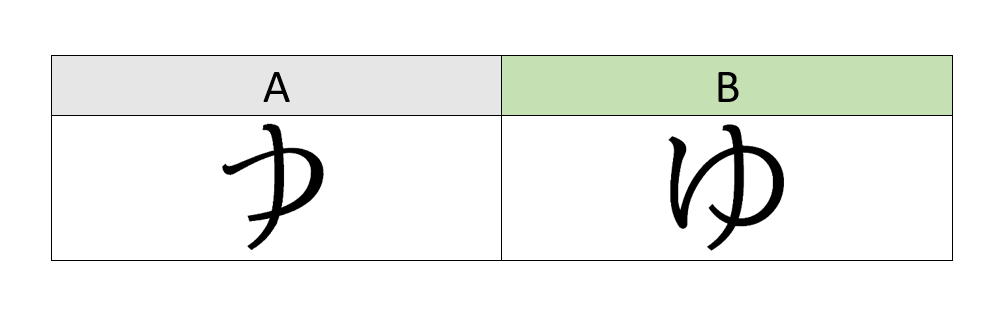
A The answer is B. There is no Hiragana for A.
[n]
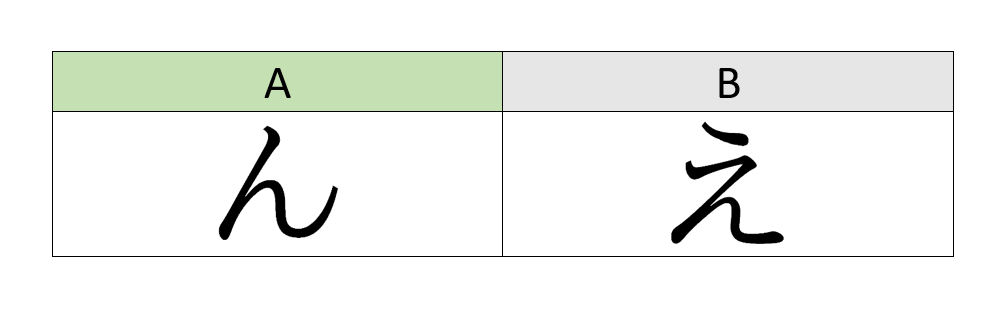
A The answer is A. The Hiragana in B is [e].
[wa]
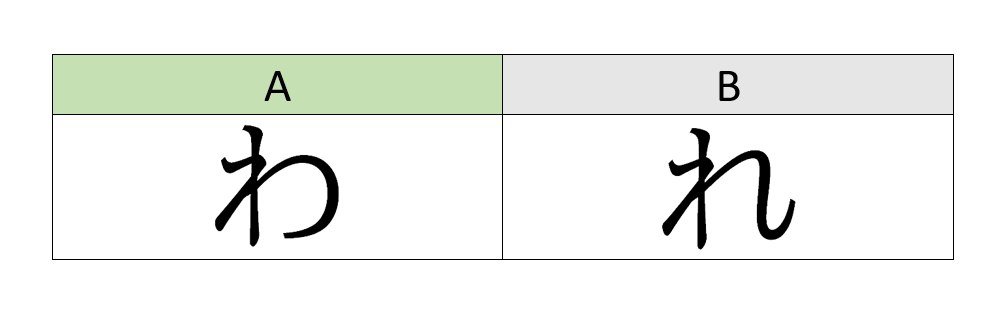
A The answer is A. The Hiragana in B is [re].
[ru]
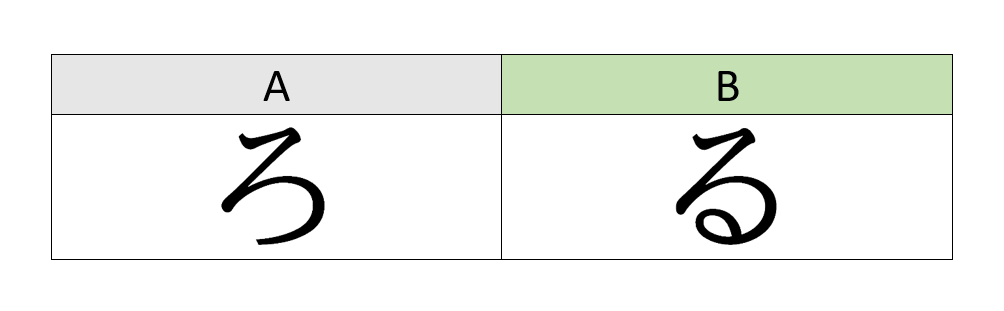
A The answer is B. The Hiragana in A is [ro].
[yo]
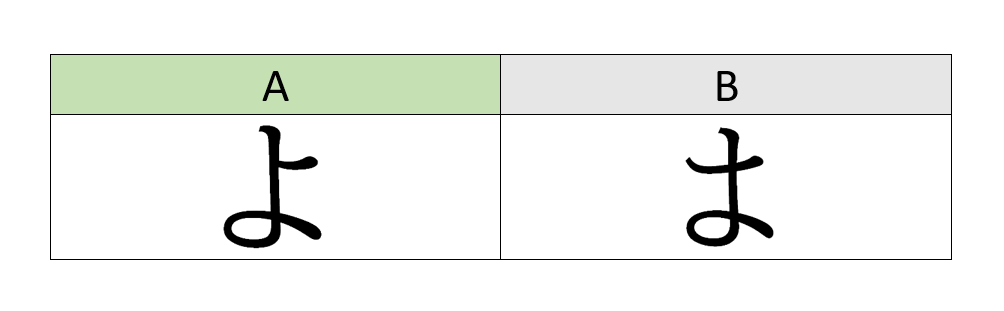
A The answer is A. There is no Hiragana for B.
Did you get all the answers right? Some of the Hiragana have similar shapes, so look carefully and remember not to confuse them!
Hiragana Quiz 14: Please read the words below.
- わすれる [wasureru]
- あらう [arau]
- みる [miru]
- いろ [iro]
- えん [en]
Have you pronounced the words correctly? Pronounce the accents (in bold) with a higher sound.
Hiragana Quiz 15: Please write the words below in Hiragana.
- tsumaranai (つまらない)
- neru (ねる)
- wakai (わかい)
- amari (あまり)
- rekishi (れきし)
Did you write them correctly? Don’t forget to practise and remember the Hiragana you didn’t get in the quiz!
The answers to this quiz are not written in the textbook font. But of course you can write them in the textbook font.
You can check the textbook font in your textbook or in the writing order chart in my lessons.
When we practise Hiragana, we usually use the textbook font. Of course, you can use any font you are comfortable with. Hiragana as written by Japanese people also differs slightly from person to person.
Once you have written the Hiragana, read the words out loud! In order to be able to speak Japanese well, it is important to become familiar with the language.
Next, the answer to the word search.
I made this word search to help you find as many Hiragana words as possible. There are so many words that it must have been hard to find them all. Thank you to everyone who took the challenge!
Now let’s check the answers! Here are the words that are hidden in the word search.
37 words learnt in the lessons
| あおい | けす | かさ | むね | ふゆ | うた | え | ぬう |
| て | おい | いく | なか | ねる | ゆき | か | に |
| い | ね | いす | かく | にく | みる | てき | |
| わたし | あ | いえ | けさ | くに | め | ゆめ | |
| なに | け | いけ | さかな | すむ | ゆ | しぬ |
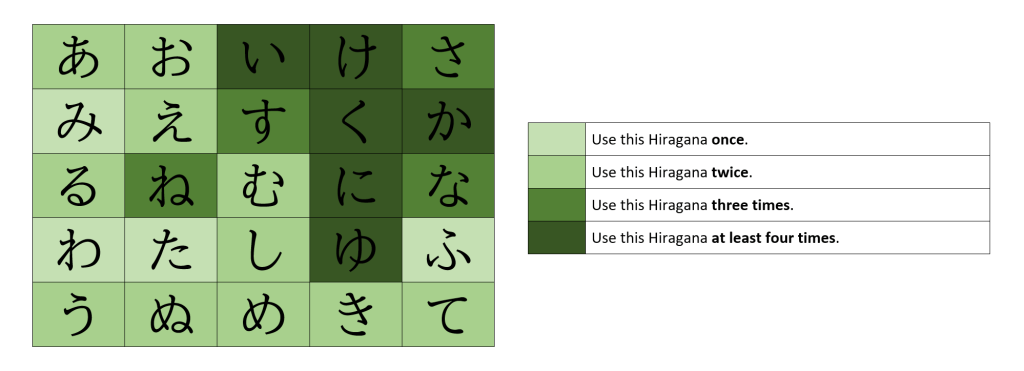
In this word search, one Hiragana is used many times. Look at the table above. The darker the green, the more times the Hiragana is used.
For example, the Hiragana み is only used for みる, so it is used only once. The Hiragana あ is used twice, once for あおい and once for あ. The Hiragana い, け, か, く, に and ゆ are each used to make four or more words.
Below you will find some other words that are hidden in this word search. We didn’t study these words in the lessons, but you can find them in the dictionary. If you can find these words too, you’re a Hiragana expert!
Words not learnt in the lessons
| あみ | さく | しき | えみ | たね | すく | き | みえすく |
| おす | くむ | した | みお | ねた | くさ | む | かくす |
| える | むし | みえ | むく | わた | なく | ため | くい |
| すね | めし | たる | にし | あお | す | たし | しめ |
| みね | さか | きし | わる | かに | すえ | し |
This is the answer to the quiz and word search.
How was the word search? Word searches are fun to do and good practice, so I’d like to introduce them again at some point.
It’s boring to just write letters. In addition to my lessons, there are lots of useful apps and youtube videos. Use them actively and have fun while practising a lot!
Writing sentences from textbooks or books, lines from your favourite manga, or lyrics from your favourite Japanese songs is also good practice!
So let’s start this lesson!
In this lesson I will introduce the Hiragana with dots ( ゛), circles ( ゜) and small や, ゆ and よ. If you have a textbook, look at sections 2 and 3 on page 25 of the second edition textbook / sections 2 and 3 on page 21 of the third edition textbook. There is a table of Hiragana and a brief explanation.
If you don’t have a textbook, you don’t need to look at anything. I’ll explain it to you and we’ll study it together!
Hiragana with dots ( ゛), circles ( ゜)
The dots ( ゛) and circles ( ゜) are the symbols used to change the sound of consonants in Hiragana.
Below I have made a table with each consonant pair, please have a look.
| without dots and circles | with dots | with circles |
| k | g | – |
| s | z | – |
| sh | j | – |
| t | d | – |
| ch | j | – |
| ts | z | – |
| h/f | b | p |
So, dots ( ゛) causes the following consonant alternations: [k] → [g], [s] → [z], [sh] → [j], [t] → [d], [ch] → [j], [ts] → [z], [h/f] → [b].
Only は, ひ, ふ, へ and ほ are followed by circles ( ゜). When “circles” is added, [h/f] changes to [p].
The Hiragana し is pronounced [shi]. The [shi] is pronounced [ji] when the “dots” is added.
Similarly, the pronunciation of ち changes from [chi] to [ji]. So ぢ will be pronounced the same as じ.
The next one is つ. When “dots” is added, the pronunciation of つ changes from [tsu] to [zu]. Again, ず and づ have the same pronunciation.
The pronunciation of ふ is [fu], but when it is followed by dots or circles, it changes to the same as the consonant [h]. So the consonants [h] and [f] change to [b] when dots is added and [p] when circles is added.
It may be difficult to understand from the text alone. So, let’s write Hiragana with dots and circles in the table according to this rule. If you have a textbook, you can look at the table in your textbook.
| a | i | u | e | o | |
| g | が [ga] | ぎ [gi] | ぐ [gu] | げ [ge] | ご [go] |
| z | ざ [za] | じ [ji] | ず [zu] | ぜ [ze] | ぞ [zo] |
| d | だ [da] | ぢ [ji] | づ [zu] | で [de] | ど [do] |
| b | ば [ba] | び [bi] | ぶ [bu] | べ [be] | ぼ [bo] |
| p | ぱ [pa] | ぴ [pi] | ぷ [pu] | ぺ [pe] | ぽ [po] |
The stroke order is as follows: write the basic Hiragana first, then both ゛and ゜, starting from the bottom.
Now you know the rules for Hiragana with dots and circles. Isn’t it easy?
Hiragana with small や, ゆ and よ
Next, I would like to explain about Hiragana combined with small や, ゆ and よ.
Remember the い line in Hiragana, everyone. The Hiragana in the い line are the Hiragana with the [i] vowel: い, き, し, ち, に, ひ, み, り. All of the Hiragana in the い line, except for い which is made up of only one vowel, are combined with the small や, ゆ and よ. The same applies to the Hiragana in the い line with dots and circles which we studied earlier.
The rules of the combination are simple. Just write a small や, ゆ or よ after the Hiragana in the い line. For pronunciation, take the [i] vowel of the Hiragana and add [ya], [yu] or [yo]. For example, きゃ is pronounced [kya].
But beware of the combination of し, ち and じ with the small や, ゆ and よ. The Hiragana し, ち and “じ” are pronounced [shi], [chi] and [ji] respectively. When these are combined with the small や, ゆ and よ, you take out the vowel [i] and add the vowels [a], [u] or [o] instead, but not [ya], [yu] and [yo]. For example, しゃ is pronounced as [sha], but not [shya].
Now let’s write the Hiragana with the small や, ゆ and よ in the chart too!
| a | u | o | |
| ky | きゃ [kya] | きゅ [kyu] | きょ [kyo] |
| sh | しゃ [sha] | しゅ [shu] | しょ [sho] |
| ch | ちゃ [cha] | ちゅ [chu] | ちょ [cho] |
| ny | にゃ [nya] | にゅ [nyu] | にょ [nyo] |
| hy | ひゃ [hya] | ひゅ [hyu] | ひょ [hyo] |
| my | みゃ [mya] | みゅ [myu] | みょ [myo] |
| ry | りゃ [rya] | りゅ [ryu] | りょ [ryo] |
| gy | ぎゃ [gya] | ぎゅ [gyu] | ぎょ [gyo] |
| j | じゃ [ja] | じゅ [ju] | じょ [jo] |
| by | びゃ [bya] | びゅ [byu] | びょ [byo] |
| py | ぴゃ [pya] | ぴゅ [pyu] | ぴょ [pyo] |
If you can do it all without looking at the table above or the textbook, you’re perfect!
If you look at the table, you will see that there are many Hiragana characters. But don’t worry, as long as you understand the rules, it shouldn’t be too hard to remember.
Hiragana Quiz: Hiragana with dots ( ゛), circles ( ゜) and small や, ゆ and よ
Now it’s quiz time!
This quiz is about the Hiragana with dots and circles and the Hiragana with small や, ゆ and よ that we studied in this lesson.
I’m sure you’ve got the basic Hiragana down by now, so let’s do lots of reading and writing practice!
As usual, the answers to the quiz will be given at the beginning of the next lesson.
Is everyone ready?
When you’re ready, take the quiz below!
Hiragana Quiz 16: Please read the words below.
- あそぶ
- いそぐ
- おちゃ
- かぞく
- てんぷら
- きょねん
- しゅくだい
- みぎ
- りゅうがくする
- せんしゅう
Hiragana Quiz 17: Please write the words below in Hiragana.
- densha
- daigaku
- yuubinkyoku
- asagohan
- enpitsu
- taberu
- renshuu
- isogashii
- kaban
- genki
That’s it for the quiz! Write it down, even if you’re not sure of the answer! You can learn a lot from making mistakes.
If you have any questions, please send me a message using our contact form!
Homework
At the end, I will give you some homework.
If you have a workbook, practise the Hiragana in your workbook. The homework is on page 122 in the second edition workbook and on page 126 in the third edition workbook.
If you don’t have a workbook, try writing the Hiragana chart you have studied in this lesson in your notebook. Please do not look at the chart on the internet or in the lesson. When you write, read the Hiragana as you write! You’ll learn both the pronunciation and the letters of the Hiragana together!
The Hiragana you have studied in this lesson are often used to describe the pronunciation of Kanji. Have a look at the Japanese lessons and blog posts on this site and check out what words they are used for.
That’s all for this lesson.
Next time will be our last Hiragana lesson!
Hiragana is an important basis for studying Japanese. Don’t let up and study until the end!
Thank you for reading!
See you in the next lesson!
You can check out other Hiragana lessons here!

And here’s our Hiragana practice page!

日本語(にほんご)のレッスン
みなさん、こんにちは!
基本(きほん)の46個(こ)のひらがなの勉強(べんきょう)、がんばりましたね!もう全部(ぜんぶ)覚(おぼ)えましたか。
今回(こんかい)と次回(じかい)の二回(にかい)は、基本(きほん)のひらがなの応用(おうよう)編(へん)です。これまでに勉強(べんきょう)したひらがなに「 ゛」や「 ゜」がついたものや、小(ちい)さい「つ」「や」「ゆ」「よ」と組(く)み合(あ)わさったものを勉強(べんきょう)します。
このレッスンでは、「 ゛」と「 ゜」、小(ちい)さい「や」「ゆ」「よ」がついたひらがなを勉強(べんきょう)しましょう。たくさんありますが、ルールは簡単(かんたん)です。基本(きほん)のひらがなを覚(おぼ)えていれば、全然(ぜんぜん)難(むずか)しくないですよ!
それでは、まずは前回(ぜんかい)のクイズの答(こた)えと、ワードサーチの答(こた)えをチェックしましょう。
クイズとワードサーチの答(こた)えを見(み)なくてもいい人(ひと)は、下(した)の「クイズとワードサーチの答(こた)えをスキップ」をクリックしてください。
それでは、はじめにクイズの答(こた)えと解説(かいせつ)です。
ひらがなクイズ⑬: AとBのどちらが正(ただ)しいですか。
[yu]
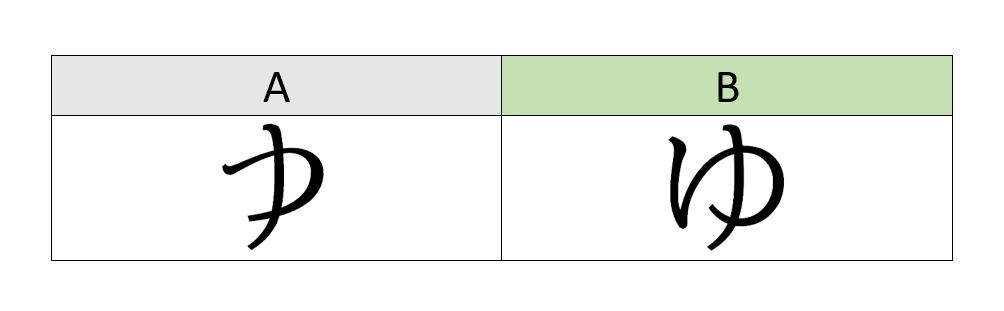
A 答(こた)えはBです。Aのひらがなは、ありません。
[n]
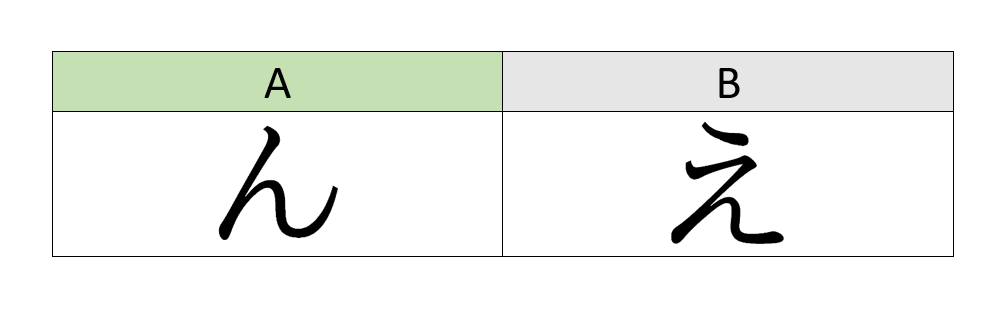
A 答(こた)えはAです。Bのひらがなは、 [e] です。
[wa]
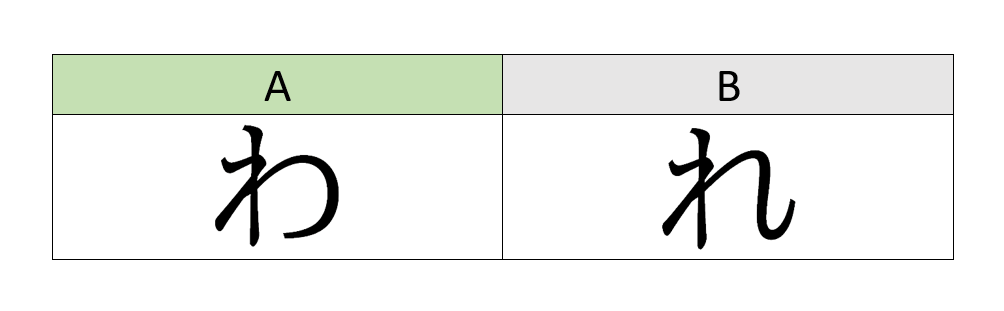
A 答(こた)えはAです。Bのひらがなは、 [re] です。
[ru]
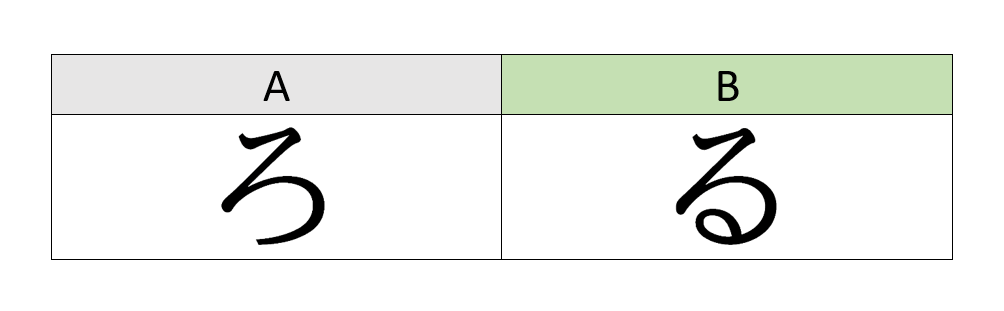
A 答(こた)えはBです。Aのひらがなは、 [ro] です。
[yo]

A 答(こた)えはAです。Bのひらがなは、ありません。
全部(ぜんぶ)正解(せいかい)できましたか。ひらがなの中(なか)には、形(かたち)が似(に)ているものがあるので、気(き)をつけましょう!
ひらがなクイズ⑭:下(した)の単語(たんご)を読(よ)んでください。
- わすれる [wasureru]
- あらう [arau]
- みる [miru]
- いろ [iro]
- えん [en]
正(ただ)しく発音(はつおん)できましたか。アクセントがあるところ(太(ふと)くなっているところ)を、より高(たか)く発音(はつおん)しましょう。
ひらがなクイズ⑮:下(した)の単語(たんご)を、ひらがなで書(か)いてください。
- tsumaranai (つまらない)
- neru (ねる)
- wakai (わかい)
- amari (あまり)
- rekishi (れきし)
正(ただ)しく書(か)けましたか。クイズに出(で)なかったひらがなの練習(れんしゅう)も、忘(わす)れないでくださいね!
答(こた)えのフォントは、教科書(きょうかしょ)のフォントじゃないです。でも、教科書(きょうかしょ)のフォントで書(か)いてもいいです。
教科書(きょうかしょ)のフォントは、教科書(きょうかしょ)や私(わたし)のレッスンの書(か)き順(じゅん)の表(ひょう)でチェックできます。
ひらがなを練習(れんしゅう)する時(とき)は、たいてい教科書(きょうかしょ)のフォントで練習(れんしゅう)します。もちろん、好(す)きなフォントを使(つか)っていいです。日本人(にほんじん)が書(か)くひらがなも、人(ひと)によって少(すこ)し違(ちが)います。
ひらがなが書(か)けたら、単語(たんご)を読(よ)んでみましょう!発音(はつおん)の練習(れんしゅう)は、話(はな)す練習(れんしゅう)にもなります。
次(つぎ)に、ワードサーチの答(こた)えです。
このワードサーチは、みなさんにできるだけたくさんひらがなの単語(たんご)を探(さが)してもらうために、作(つく)りました。なので、たくさん単語(たんご)があって大変(たいへん)だったと思(おも)います。挑戦(ちょうせん)してくれたみなさん、ありがとうございます!
それでは、答(こた)えを見(み)てみましょう!隠(かく)れている単語(たんご)は、以下(いか)のとおりです。
レッスンで勉強(べんきょう)した37個(こ)の単語(たんご)
| あおい | けす | かさ | むね | ふゆ | うた | え | ぬう |
| て | おい | いく | なか | ねる | ゆき | か | に |
| い | ね | いす | かく | にく | みる | てき | |
| わたし | あ | いえ | けさ | くに | め | ゆめ | |
| なに | け | いけ | さかな | すむ | ゆ | しぬ |

同(おな)じひらがなを、何度(なんど)も使(つか)います。上(うえ)の表(ひょう)を見(み)てください。緑色(みどりいろ)が濃(こ)いひらがなは、たくさん使(つか)います。
たとえば、「み」は「みる」だけなので、一回(いっかい)です。「あ」は「あおい」と「あ」で使(つか)うので、二回(にかい)です。「い」「け」「か」「く」「に」「ゆ」は、それぞれ4個(こ)以上(いじょう)単語(たんご)が作(つく)れます。
下(した)に、このワードサーチに隠(かく)れている他(ほか)の単語(たんご)も紹介(しょうかい)します。レッスンでは勉強(べんきょう)しませんでしたが、辞書(じしょ)にある単語(たんご)です。これらの単語(たんご)も見(み)つけられた人(ひと)は、ひらがなマスターですね!
レッスンで勉強(べんきょう)しなかった単語(たんご)
| あみ | さく | しき | えみ | たね | すく | き | みえすく |
| おす | くむ | した | みお | ねた | くさ | む | かくす |
| える | むし | みえ | むく | わた | なく | ため | くい |
| すね | めし | たる | にし | あお | す | たし | しめ |
| みね | さか | きし | わる | かに | すえ | し |
これが、クイズとワードサーチの答(こた)えです。
ワードサーチはどうでしたか。ワードサーチは楽(たの)しくできていい練習(れんしゅう)になるので、またどこかで紹介(しょうかい)したいと思(おも)います。
文字(もじ)の練習(れんしゅう)は、ただ書(か)くだけだとつまらないです。私(わたし)のレッスンの他(ほか)にも、便利(べんり)なアプリやyoutubeがたくさんありますよね。それらを使(つか)って、楽(たの)しくたくさん練習(れんしゅう)しましょう!
教科書(きょうかしょ)や日本語(にほんご)の本(ほん)の文章(ぶんしょう)、好(す)きな漫画(まんが)のせりふや好(す)きな日本語(にほんご)の歌(うた)の歌詞(かし)を書(か)いてみるのもいいですよ!
それでは、今回(こんかい)のレッスンを始(はじ)めましょう!
このレッスンでは、「 ゛」と「 ゜」、小(ちい)さい「や」「ゆ」「よ」のついたひらがなについて紹介(しょうかい)します。教科書(きょうかしょ)がある人(ひと)は、第二版(だいにはん)の教科書(きょうかしょ)の25ページの2と3/第三版(だいさんぱん)の教科書(きょうかしょ)の21ページの2と3を見(み)てください。ひらがなの表(ひょう)と説明(せつめい)があります。
教科書(きょうかしょ)がない人(ひと)は、何(なに)も見(み)なくていいです。私(わたし)が説明(せつめい)するので、一緒(いっしょ)に勉強(べんきょう)しましょう!
「 ゛」と「 ゜」のついたひらがな
「 ゛」と「 ゜」は、ひらがなの子音(しいん)の音(おと)を変(か)える記号(きごう)です。
下(した)に、それぞれの子音(しいん)のペアをまとめた表(ひょう)を作(つく)りました。
| 「 ゛」「 ゜」なし | 「 ゛」あり | 「 ゜」あり |
| k | g | – |
| s | z | – |
| sh | j | – |
| t | d | – |
| ch | j | – |
| ts | z | – |
| h/f | b | p |
つまり、「 ゛」がつくと [k] → [g]、 [s] → [z]、[sh] → [j]、 [t] → [d]、[ch] → [j]、 [ts] → [z]、 [h/f] → [b] に変(か)わります。
「 ゜」がつくのは「は」「ひ」「ふ」「へ」「ほ」だけです。「 ゜」がつくと、 [h/f] は [p] に変(か)わります。
ひらがなの「し」は [shi] で特別(とくべつ)でしたよね。「し」は「 ゛」の時(とき)も特別(とくべつ)で、[ji] になります。
同(おな)じように、「ち」も [chi] が [ji] になります。つまり、「ぢ」は「じ」と同(おな)じ発音(はつおん)です。
次(つぎ)は、「つ」ですね。[tsu] は [zu] になります。これも、「ず」と「づ」は同(おな)じ発音(はつおん)になります。
「ふ」は [fu] でしたが、「 ゛」がつく時(とき)は、[h] と同(おな)じで [b]、「 ゜」がつく時(とき)も [h] と同じで [p] になります。
説明(せつめい)だけだとわかりにくいと思(おも)うので、このルールで、「 ゛」と「 ゜」のひらがなを書(か)いてみましょう。教科書(きょうかしょ)がある人(ひと)は、教科書(きょうかしょ)の表(ひょう)を見(み)てもいいです。
| a | i | u | e | o | |
| g | が [ga] | ぎ [gi] | ぐ [gu] | げ [ge] | ご [go] |
| z | ざ [za] | じ [ji] | ず [zu] | ぜ [ze] | ぞ [zo] |
| d | だ [da] | ぢ [ji] | づ [zu] | で [de] | ど [do] |
| b | ば [ba] | び [bi] | ぶ [bu] | べ [be] | ぼ [bo] |
| p | ぱ [pa] | ぴ [pi] | ぷ [pu] | ぺ [pe] | ぽ [po] |
書(か)き順(じゅん)は、基本(きほん)のひらがなを書(か)いた後(あと)で、「 ゛」も「 ゜」も下(した)から書(か)きます。
これで、「 ゛」と「 ゜」のひらがなのルールがわかったと思(おも)います。簡単(かんたん)ですよね。
小(ちい)さい「や」「ゆ」「よ」のついたひらがな
次(つぎ)に、ひらがなと小(ちい)さい「や」「ゆ」「よ」の組(く)み合(あ)わせについて説明(せつめい)します。
みなさん、ひらがなの「い」の行(ぎょう)を思(おも)い出(だ)してください。「い」の行(ぎょう)は、母音(ぼいん)が [i] の「い」「き」「し」「ち」「に」「ひ」「み」「り」です。この「い」行(ぎょう)のひらがなは、母音(ぼいん)だけの「い」以外(いがい)の全部(ぜんぶ)が小(ちい)さい「や」「ゆ」「よ」と組(く)み合(あ)わさります。先(さき)ほど勉強(べんきょう)した「 ゛」と「 ゜」の「い」行(ぎょう)のひらがなも同(おな)じです。
組(く)み合(あ)わせのルールは、簡単(かんたん)です。「い」行(ぎょう)のひらがな + 小(ちい)さい「や」「ゆ」「よ」です。発音(はつおん)は、「い」行(ぎょう)のひらがなの [i] をとって、 [ya] [yu] [yo] をつけます。たとえば、「きゃ」の発音(はつおん)は [kya] になります。
でも、「し」「ち」「じ」の三(みっ)つの発音(はつおん)は、特別(とくべつ)です。「し」「ち」「じ」の発音(はつおん)は、それぞれ [shi] [chi] [ji] ですね。これが小(ちい)さい「や」「ゆ」「よ」と組(く)み合(あ)わさる時(とき)は、[i] をとって [a] [u] [o] をつけます。 [ya] [yu] [yo] じゃないです。たとえば、「しゃ」は [sha] になります。 [shya] じゃないです。
それでは、小(ちい)さい「や」「ゆ」「よ」のついたひらがなも、表(ひょう)に書(か)いてみましょう!
| a | u | o | |
| ky | きゃ [kya] | きゅ [kyu] | きょ [kyo] |
| sh | しゃ [sha] | しゅ [shu] | しょ [sho] |
| ch | ちゃ [cha] | ちゅ [chu] | ちょ [cho] |
| ny | にゃ [nya] | にゅ [nyu] | にょ [nyo] |
| hy | ひゃ [hya] | ひゅ [hyu] | ひょ [hyo] |
| my | みゃ [mya] | みゅ [myu] | みょ [myo] |
| ry | りゃ [rya] | りゅ [ryu] | りょ [ryo] |
| gy | ぎゃ [gya] | ぎゅ [gyu] | ぎょ [gyo] |
| j | じゃ [ja] | じゅ [ju] | じょ [jo] |
| by | びゃ [bya] | びゅ [byu] | びょ [byo] |
| py | ぴゃ [pya] | ぴゅ [pyu] | ぴょ [pyo] |
上(うえ)の表(ひょう)や教科書(きょうかしょ)を見(み)ないで、全部(ぜんぶ)書(か)けたらかんぺきです!
ひらがながたくさんありますが、ルールが簡単(かんたん)なので、これもすぐに覚(おぼ)えられると思(おも)います。
ひらがなクイズ:「 ゛」と「 ゜」、小(ちい)さい「や」「ゆ」「よ」のついたひらがな
それでは、クイズタイム!
今回(こんかい)のクイズは、「 ゛」と「 ゜」のついたひらがなと、小さい「や」「ゆ」「よ」のついたひらがなについてです。
もうみなさんは基本(きほん)のひらがなはかんぺきだと思(おも)うので、今回(こんかい)は読(よ)む練習(れんしゅう)と書(か)く練習(れんしゅう)をたくさんしましょう!
クイズの答(こた)えは、いつものように次(つぎ)のレッスンの最初(さいしょ)で説明(せつめい)します。
みなさん、準備(じゅんび)はいいですか。
準備(じゅんび)ができたら、下(した)のクイズに挑戦(ちょうせん)してみてください!
ひらがなクイズ⑯:下(した)の単語(たんご)を読(よ)んでください。
- あそぶ
- いそぐ
- おちゃ
- かぞく
- てんぷら
- きょねん
- しゅくだい
- みぎ
- りゅうがくする
- せんしゅう
ひらがなクイズ⑰:下(した)の単語(たんご)を、ひらがなで書(か)いてください。
- densha
- daigaku
- yuubinkyoku
- asagohan
- enpitsu
- taberu
- renshuu
- isogashii
- kaban
- genki
クイズは以上(いじょう)です!答(こた)えに自信(じしん)がなくても、書(か)いてみましょう!間違(まちが)うこともいい勉強(べんきょう)になりますよ。
何(なに)か質問(しつもん)があったら、お問(と)い合(あ)わせフォームからメッセージをお願(ねが)いします!
宿題(しゅくだい)
最後(さいご)に、宿題(しゅくだい)です。
ワークブックがある人(ひと)は、ワークブックにあるひらがなの練習(れんしゅう)をしましょう。第二版(だいにはん)のワークブックは122ページ、第三版(だいさんぱん)のワークブックは126ページが宿題(しゅくだい)です。
ワークブックがない人(ひと)は、このレッスンで勉強(べんきょう)したひらがなの表(ひょう)を、書(か)いてみてください。インターネットやレッスンの表(ひょう)を見(み)ないで書(か)いてくださいね。書(か)く時(とき)は、ひらがなを読(よ)みながら書(か)きましょう! ひらがなの発音(はつおん)と文字(もじ)を一緒(いっしょ)に覚(おぼ)えましょう!
このレッスンで勉強(べんきょう)したひらがなは、漢字(かんじ)の発音(はつおん)を表(あらわ)す時(とき)に、よく使(つか)います。このサイトの日本語(にほんご)のレッスンやブログの記事(きじ)を見(み)て、どんな単語(たんご)に使(つか)われているのか、チェックしてみてください。
それでは、今回(こんかい)のレッスンはこれで終(お)わりです。
ひらがなのレッスンは、次(つぎ)が最後(さいご)です!
ひらがなは、日本語(にほんご)を勉強(べんきょう)するための大事(だいじ)な基礎(きそ)です。最後(さいご)まで集中(しゅうちゅう)して、勉強(べんきょう)しましょう!
最後(さいご)までお読(よ)みくださり、ありがとうございます!
次(つぎ)のレッスンで 、お会(あ)いしましょう!
他(ほか)のひらがなのレッスンはこちらからチェックできます!
ひらがな練習(れんしゅう)のページはこちらです!

